 English
 Español
 Deutsch





Tax Exemption When Selling Property in Spain
- Sellers aged 65 and over, fiscal residents in Spain who are selling their primary residence in Ibiza are fully exempt from Spanish capital gains tax (ganancia patrimonial).
- If you are any age and reinvesting the proceeds from a primary home sale into a new vivienda habitual within two years offers full or partial tax relief.
- EU/EEA non-resident sellers can qualify for capital gains tax exemptions under specific primary residence reinvestment conditions.
- Exemptions apply strictly to income tax and do not automatically waive local municipal taxes such as plusvalía municipal.
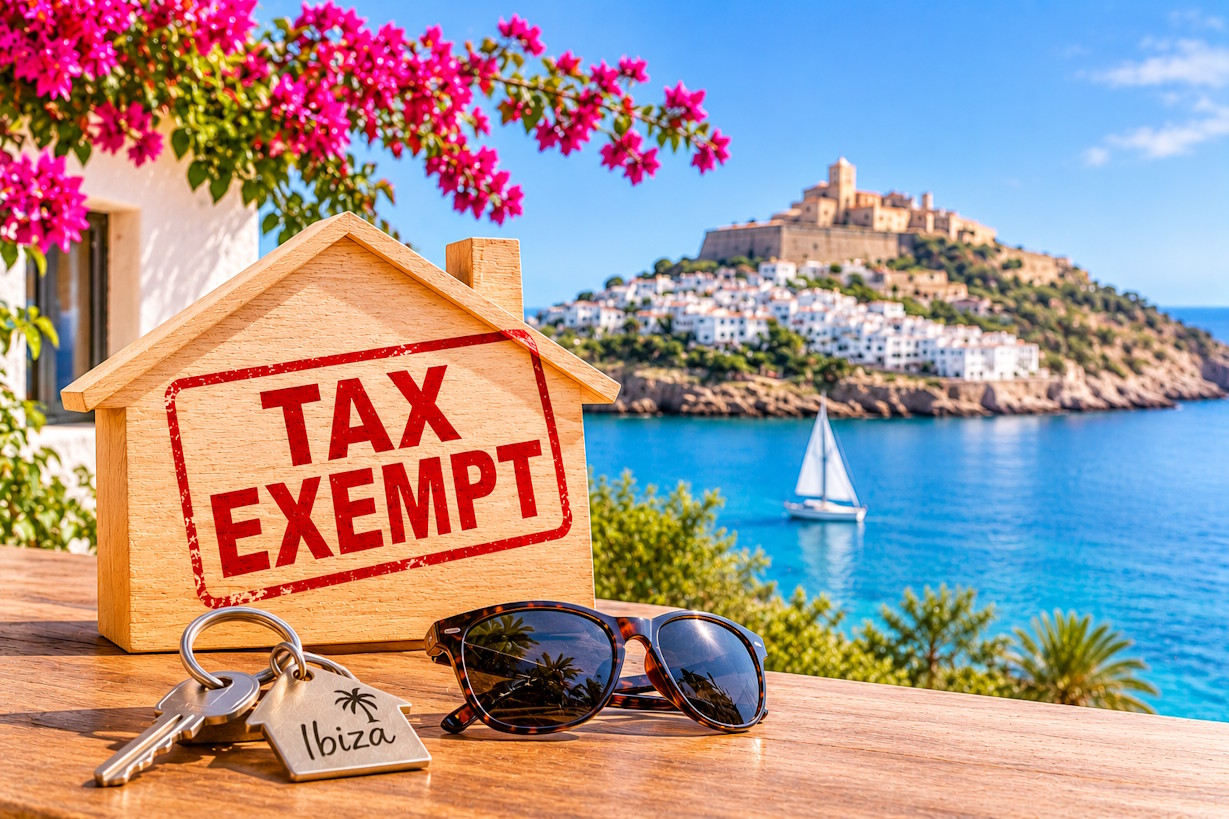
Selling a property in Spain may generate a ganancia patrimonial (capital gain), which is normally subject to Spanish income tax. However, certain exemptions may apply, depending on the seller’s age, tax residence, the type of property sold and what is done with the sale proceeds.
The rules can be complex, particularly for non-residents and international property owners. Before completing a sale, it is advisable to obtain advice from a qualified tax adviser who can assess your personal circumstances.
When Can the Sale of a Property Be Tax-Exempt?
The following are some of the main situations in which a capital gain arising from the sale of a home may qualify for an exemption or partial exemption under Spanish tax rules.
1. Sellers Over 65 Years of Age
A capital gain arising from the sale of a person’s habitual residence is exempt from Spanish income tax when the seller is aged 65 or over at the time of the sale. This applies only if the sellers are tax residents in Spain. This exemption can also apply to people who are officially recognised as being in a situation of severe or major dependency.
- The property must generally qualify as the seller’s habitual residence.
- The exemption does not normally depend on reinvesting the sale proceeds in another property.
- The precise conditions should be checked carefully, particularly where the seller moved out of the property before the sale.
For tax purposes, a habitual residence generally means a property in which the taxpayer has lived continuously for at least three years, subject to certain exceptions established by law.
2. Reinvestment in a New Habitual Residence
Regardless of age, capital gains arising from the sale of a habitual residence may be exempt from tax where the proceeds from the sale are reinvested in the purchase or renovation of another principal residence. The reinvestment may be made in a single transaction or in several transactions within a maximum period of two years from the date of sale.
- Full exemption: this may be available when the full amount obtained from the sale is reinvested, subject to the applicable conditions.
- Partial exemption: when only part of the sale proceeds is reinvested, only the corresponding proportion of the capital gain may be exempt.
- Declaration requirement: the reinvestment must be properly reported in the relevant tax return, even where the taxpayer expects the gain to be exempt.
The new property must meet the requirements for being regarded as the taxpayer’s habitual residence. The rules may also cover certain qualifying rehabilitation works, provided the statutory conditions are satisfied.
3. Sale by Certain Non-Residents
In some circumstances, residents of the European Union or European Economic Area may qualify for an exemption when selling a property that was their habitual residence in Spain and reinvesting the proceeds in a new habitual residence. The requirements depend on the seller’s tax status and the applicable legislation at the time of the sale. [4]
Important Points to Consider
A sale is not automatically tax-free merely because the property was the seller’s first home or because the proceeds are used to purchase another property. The property normally needs to qualify as the seller’s vivienda habitual, and the reinvestment must comply with the relevant legal deadlines and conditions.
- Tax residence matters: Spanish residents and non-residents may be subject to different rules.
- Partial reinvestment may result in partial exemption: reinvesting only part of the proceeds will not necessarily exempt the entire gain.
- Other taxes may still apply: an income-tax exemption does not automatically remove possible municipal taxes, such as the tax on the increase in value of urban land (plusvalía municipal).
- Documentation is important: keep purchase and sale deeds, invoices for qualifying expenses, proof of residence and evidence of any reinvestment.
Get Professional Advice Before Selling
The calculation of a capital gain can depend on the purchase price, acquisition costs, improvement works, selling expenses, tax residence and the date on which the property ceased to be the seller’s habitual residence.
At inmobiliaria LAS ANCLAS, we can help property owners in Ibiza understand the practical aspects of selling their property and put them in contact with appropriate legal and tax professionals for advice about their individual situation.
This article is for general information only and does not constitute tax or legal advice. Spanish tax legislation may change, and each transaction should be reviewed individually before signing a sale.
All information is supplied without liability!




